

Tree and Vegetation Management in a Changing Climate: Safer Hazard Tree Removal
Climate change is fundamentally transforming the requirements for tree care, vegetation management, and public safety. Prolonged heatwaves, drought, severe weather events, and pest infestations place trees under constant stress. The result is an increase in damaged timber, unstable tree structures, and greater risks during hazardous tree removal. Municipalities, forestry operations, tree care contractors, and operators of critical infrastructure are particularly affected. Urban trees improve the microclimate, provide shade, and filter air pollutants. At the same time, they suffer from sealed surfaces, urban heat islands, and restricted root space. As a result, tree care is increasingly becoming an ongoing public safety responsibility.
Why Does Climate Change Lead to More Damaged Timber and Hazardous Trees?
The growing number of hazardous trees is caused by several interrelated factors that reinforce one another:
- Drought stress weakens tree vitality: Water shortages reduce a tree's natural resilience, making weakened trees more susceptible to fungi, bacteria, and insect pests.
- Extreme weather destabilizes already weakened trees: Storms, heavy rainfall, and prolonged heat place additional stress on trunks, crowns, and root systems.
- Deadwood becomes an immediate hazard: Dead branches can fall unexpectedly even during light winds or minor vibrations.
- Green branch failure is difficult to predict: Even healthy-looking, leafy branches may suddenly break due to drought stress, hidden decay, or excessive biological loading.
- Damage is not always visible: In certain species, such as beech, drought damage may become difficult to detect after leaf fall, increasing the risk of overlooking structural instability.
What Challenges Do Municipalities and Tree Care Professionals Face?
For municipalities, forestry organizations, and arboricultural contractors, the focus of work is shifting. Planned maintenance is increasingly supplemented – or even replaced – by emergency safety measures, damaged timber removal, and emergency tree felling.
The main challenges include:
- Greater demand for public safety inspections: Roads, sidewalks, railway corridors, overhead power lines, and public spaces require more frequent inspections and vegetation clearance.
- Rising costs: Additional tree inspections, irrigation, emergency removals, and damaged timber management place increasing pressure on municipal budgets.
- Higher accident risk: Damaged wood may be under internal tension, fail unpredictably, or respond differently during cutting than expected.
- Increased pressure on personnel and equipment: Operations often need to be carried out at short notice, safely, and with minimal disruption to traffic and infrastructure.
Climate Change and Tree Care: Six Facts About Current Developments
Current weather records, forest condition surveys, and field experience clearly illustrate these developments:
- Germany Is Significantly Warmer Than in the Past
With an average annual temperature of 10.9°C, 2024 was the warmest year since weather records began in Germany. In 2025, the nationwide average temperature remained around 10.0°C, well above the long-term average. For trees, this means shorter recovery periods and longer periods of environmental stress.
- The Number of Hot Days Continues to Increase
In 2025, Germany recorded an average of 11.1 days with temperatures of at least 30°C (86°F). Although annual figures fluctuate, the long-term trend is clearly upward. For urban trees and already stressed vegetation, extended heatwaves significantly increase water stress.
- Forest Health Remains Under Pressure
Forest condition surveys continue to show a high level of damage. Crown thinning, drought stress, and secondary damage remain key indicators of declining vitality across many tree species.
- Urban Trees Require More Irrigation and Better Prioritization
The city of Heidelberg maintains approximately 50,000 urban trees, excluding municipal forests and privately owned trees. During periods of heat and drought, available resources must be carefully prioritized. Maintenance work that is not immediately safety-critical may need to be temporarily postponed.
- Tree care becomes a budget issue
Climate-related damage is increasing the need for inspections, maintenance, irrigation, and tree removals. For cities and municipalities, tree care is becoming not only an environmental responsibility but also a growing financial challenge.
- Critical Infrastructure Requires Preventive Vegetation Management
Along roads, railway corridors, and overhead power lines, vegetation management is essential for operational safety. As trees and woody vegetation become increasingly unstable, planned, mechanized, and safe maintenance methods are becoming more important than ever.
Where Do Conventional Hazardous Tree Removal Methods Reach Their Limits?
When dealing with damaged trees, confined work sites, or operations along roads and railways, conventional tree removal methods are not always sufficient.

Rope access climbing is labor-intensive and places arborists directly within the hazard zone. In structurally weakened trees, unpredictable branch failures or unstable stem sections can pose significant safety risks.
Aerial work platforms increase the distance between the operator and the tree, but their reach is often limited depending on site conditions. In addition, handling and lowering heavy or unstable trunk sections in a controlled manner remains challenging.
Telehandlers equipped with grapple saws can be effective in certain applications but often reach their limits in terms of stability, lifting capacity, working range, and operational flexibility.
Modern Tree Removal Technology: Safety Through Distance
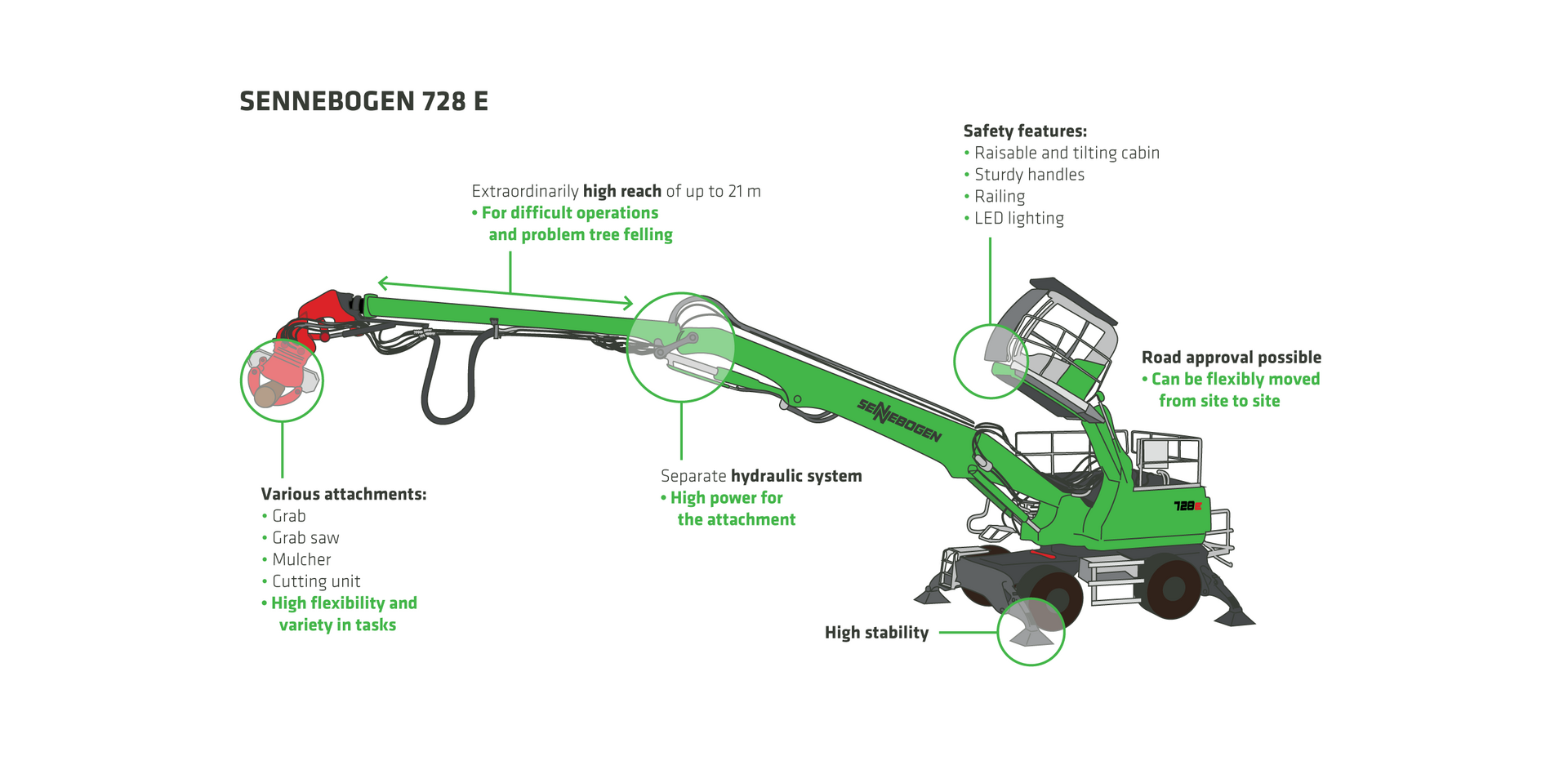
SENNEBOGEN tree felling excavators transform hazardous tree removal into a controlled, machine-assisted operation. Their guiding principle is simple: safety through distance.
The operator remains protected inside the machine's cab while the machine grips the trunk or branch section, secures the wood, performs the cut, and places the material down in a controlled manner. This "Grip – Cut – Place" approach significantly reduces the risk of uncontrolled falling timber and makes material handling far more predictable.
SENNEBOGEN 718 E vs. SENNEBOGEN 728 E
Feature | SENNEBOGEN 718 E | SENNEBOGEN 728 E |
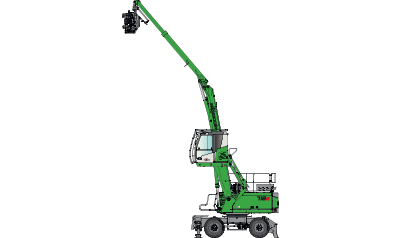
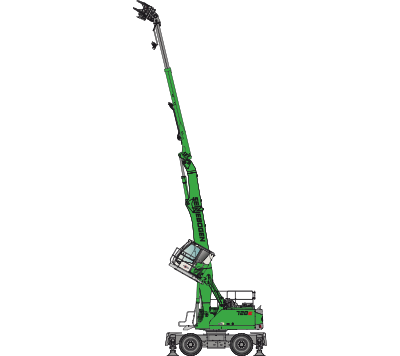
| Operating Weight | 21.4 t | up to 34.5 t |
| Engine Power | 123 kW | 140 kW |
| Maximum Reach | 15 m | 21 m |
| Primary Application | Compact design; ideal for use along roads, for difficult tree felling operations, and in confined work areas. | Impressive size and versatility; ideal for demanding felling operations along state highways and freeways. |
| Key strengths |
|
|
Machines in use


Your contact person
Press inquiries: [email protected]
SENNEBOGEN
Maschinenfabrik GmbH
Sennebogenstraße 10
94315 Straubing