

New custom joystick steering for telehandlers
The applications of SENNEBOGEN telehandlers often require precise driving and maneuvering in confined spaces, while simultaneously demanding reliable directional stability when traveling over longer distances. Since the steering system, as a central control element, has a decisive influence on productivity, safety, and ergonomics, SENNEBOGEN introduces a market innovation in the telehandler sector with its newly developed joystick steering. This system specifically addresses these seemingly conflicting requirements. To ensure optimal adaptation to individual operating profiles, the concept focuses on maximum freedom of choice and a functional symbiosis of control systems.
Analysis of Conventional Steering Systems and Their Limitations

The vast majority of telehandlers currently on the market rely on the proven hydrostatic steering wheel system. This technology has established itself over decades as a robust standard and enjoys universal acceptance among operators due to its intuitive operating logic. Steering input is provided directly via the steering wheel, while the selection of different steering modes — such as all-wheel steering, front-axle steering, or crab steering — is typically implemented via additional switches or levers in the cab.
Despite its reliability, significant ergonomic disadvantages become apparent during intensive work operations. Particularly during repetitive loading cycles and frequent maneuvering, numerous steering wheel rotations are required to position the machine precisely. These constant, large-scale movements place considerable strain on the operator’s shoulder and arm muscles during shift operation. While steering wheel control provides stability at higher speeds, it often becomes an efficiency bottleneck and a source of operator fatigue during slow, work-focused operation.
New Joystick Steering in SENNEBOGEN Telehandlers
To close this gap, an innovative steering concept was developed that transfers the advantages of joystick control, already familiar from SENNEBOGEN material handlers, to telehandlers. Technically, this system is implemented as an electronic steer-by-wire concept.
A key advantage of this digital architecture is the implementation of software-based steering curves. This allows the steering response to be dynamically adapted to the respective driving situation. At low speeds, the system enables extremely fine resolution, meaning minimal hand movements are sufficient for precise corrections. As speed increases, a progressive limitation of the maximum steering angle ensures that the machine remains stable and safely on track even during faster travel.
To meet the highest safety standards, the entire system is designed with redundancy and features continuous plausibility checks of all input signals. The joystick acts as a highly sensitive input device that digitally captures the driver’s hand movements. These signals are processed in real time by a central control unit and transmitted to the steering hydraulics.

The Symbiosis of Tradition and Modern Technology: The Dual Control Concept
A key differentiating feature of SENNEBOGEN telehandlers is the possibility of customer-specific control selection. The system is available either as a pure joystick steering solution or in combination with a conventional steering wheel. This concept addresses the limitations of previous market solutions, where the complete elimination of the steering wheel often reduced flexibility during road travel and limited general user acceptance.
This approach gives operators full flexibility: for longer transfer journeys or road transport, the traditional steering wheel is used, providing a familiar and stable driving experience. Once the machine enters working mode and precise maneuvering or loading operations are required, the joystick steering can be activated.
Switching between the systems occurs either via a dedicated control element or through intelligent logic that detects the active input. To prevent operating errors, the software ensures that only one input device has priority over the steering axis at any given time. If an irregularity occurs during joystick operation, the system automatically reverts to conventional steering wheel control as part of its safety concept.
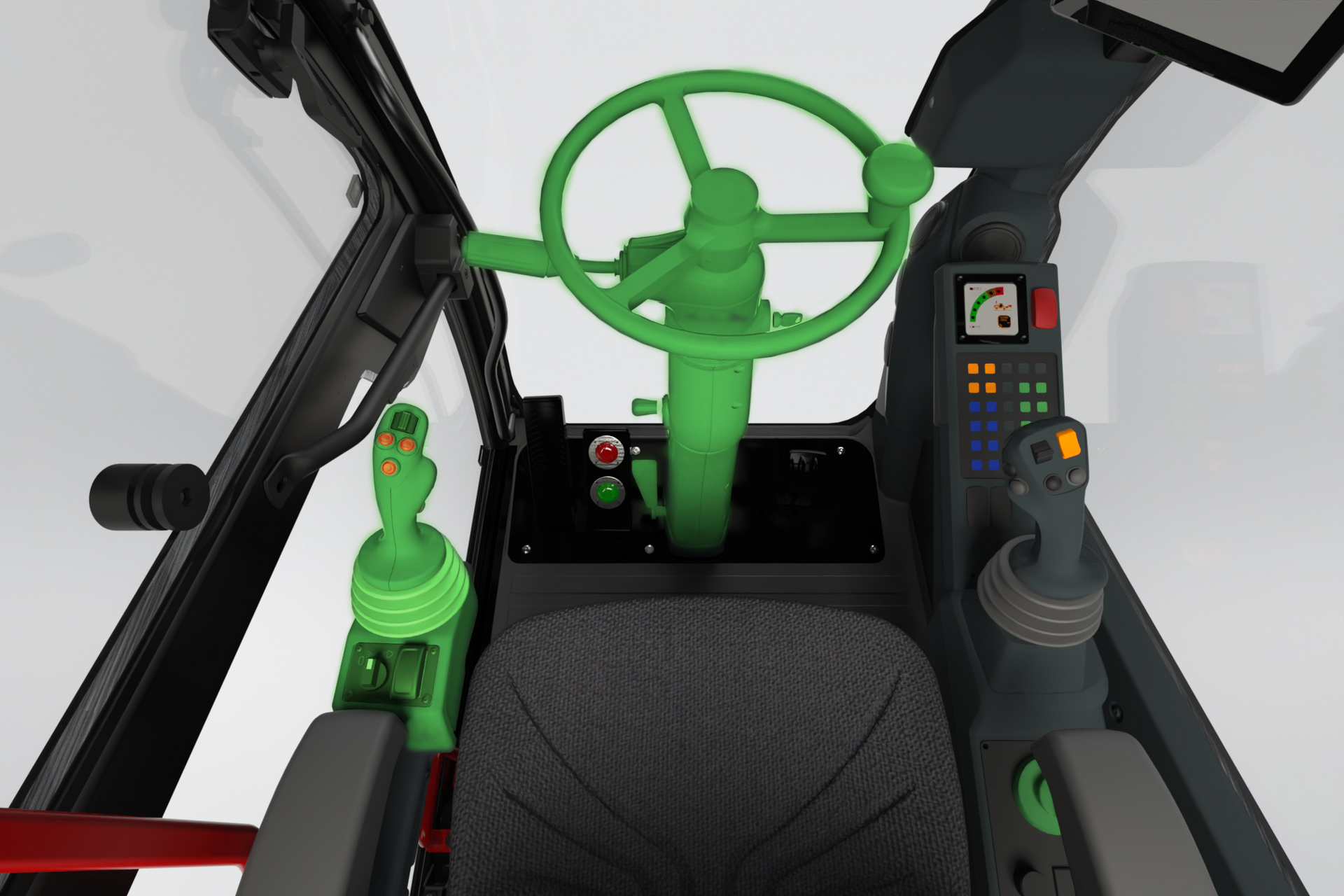
Ergonomic Advantages and Operational Efficiency
The benefits of this combined concept extend across several levels. From an ergonomic perspective, integrating the joystick into the armrest enables a permanently neutral seating position. Arm and shoulder movements are reduced to a minimum, significantly delaying operator fatigue. In addition, the optional elimination of constant steering wheel operation considerably improves forward and downward visibility, as no obstructive steering movements occur within the operator’s direct field of view.
From an operational standpoint, the direct implementation of steering commands leads to faster work cycles. Direction changes can be carried out without repositioning the hands, increasing precision and reducing the risk of collisions in confined environments. Because the most suitable control concept is always available for the respective situation, the machine becomes more versatile overall and more attractive for different operator profiles.
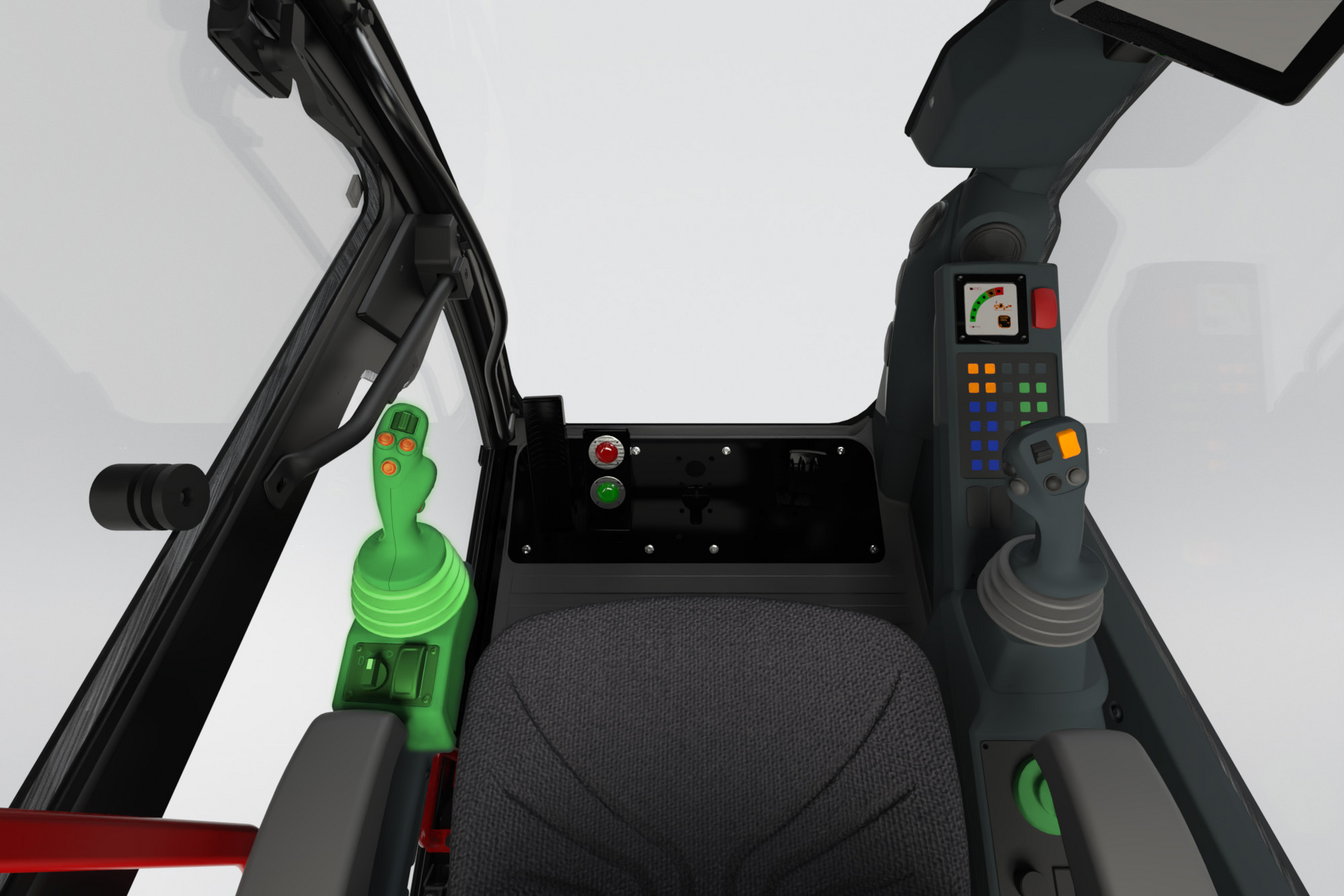
Tailor-Made Control Concepts for Every Requirement
The introduction of joystick steering for telehandlers represents a logical advancement that places the focus on the individual needs of the operator. The decisive advantage for customers lies in the maximum flexibility when configuring the machine. Depending on the specific application profile and operator preference, users can freely choose whether the telehandler is equipped with the classic steering wheel system, a pure joystick steering solution, or the combined dual system.
While conventional steering wheel control continues to impress with its intuitive operation and safe driving characteristics during transport operations, the pure joystick option provides maximum ergonomic relief and optimized visibility during intensive material handling tasks. The dual solution ultimately combines the safety of conventional steering with the precision of modern steer-by-wire technology.
Through this freedom of choice, the system sets new standards for productive work under demanding conditions and demonstrates that technological progress is most effective when it gives customers the freedom to determine the operating concept that best suits their needs.
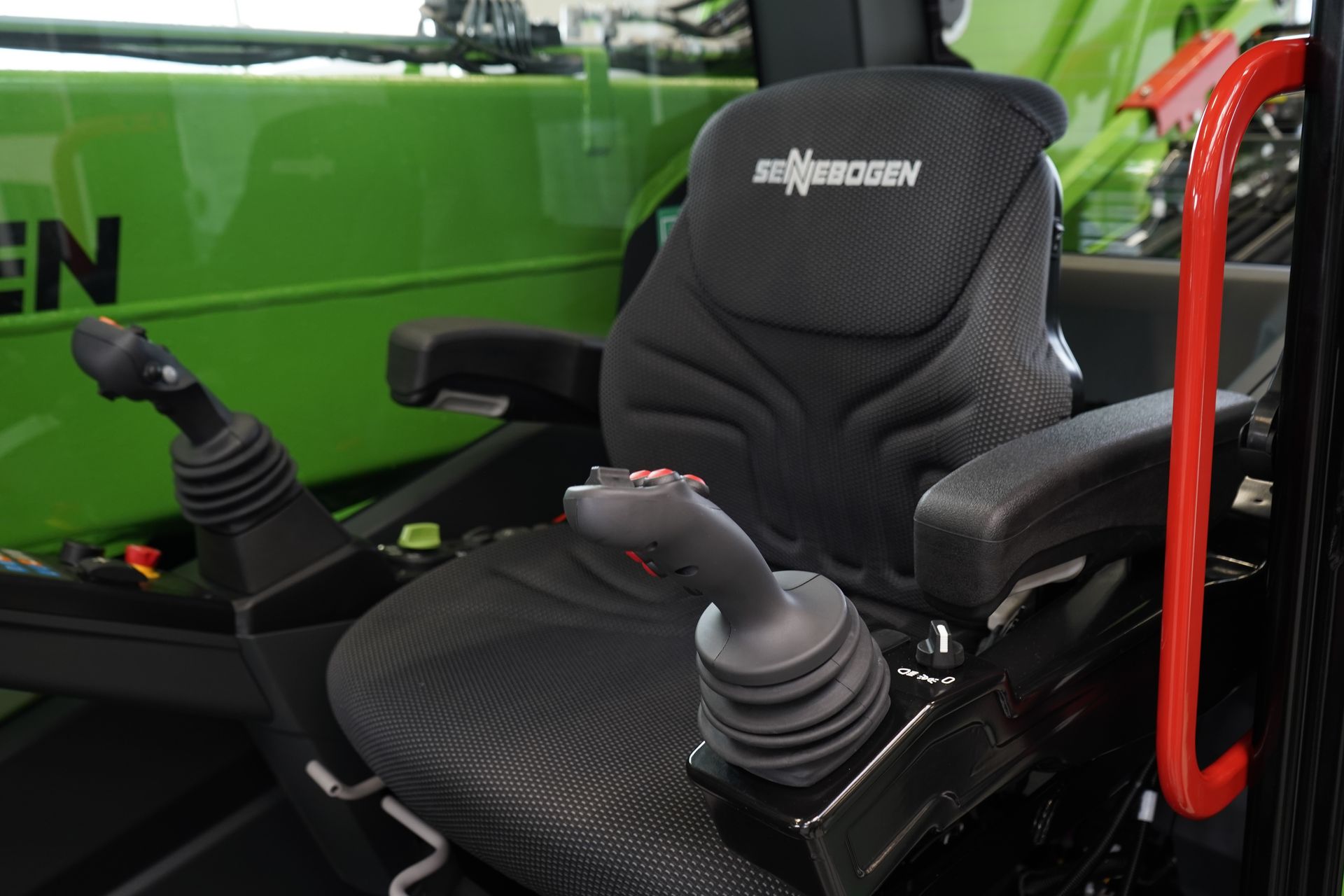
Maximum flexibility in machine configuration




Press images

Press images

Press images

Press images

Press images
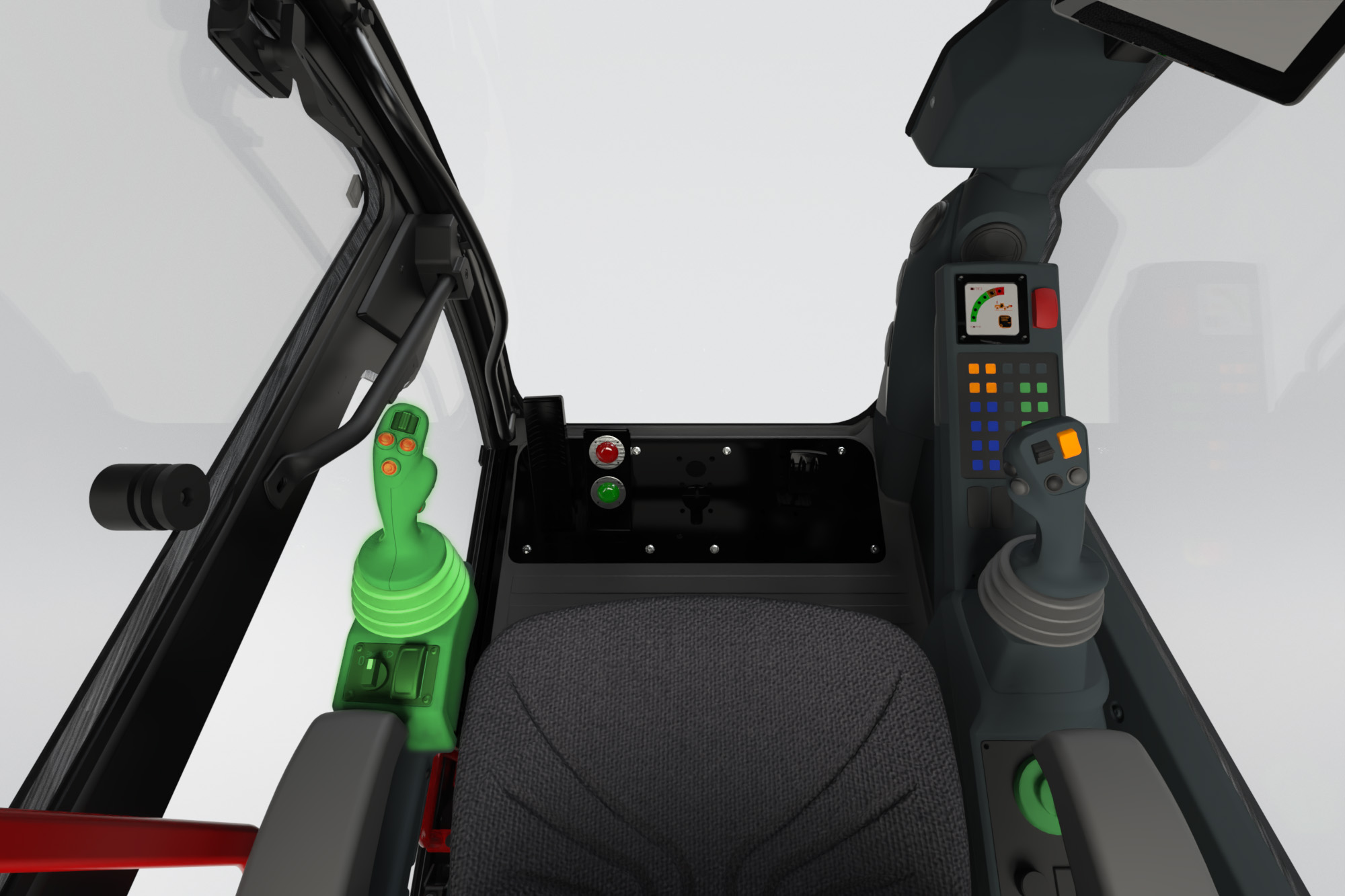
Press files
Press files
Your contact person
Press inquiries: [email protected]
SENNEBOGEN
Maschinenfabrik GmbH
Sennebogenstraße 10
94315 Straubing